
Anyone working on plastics formulation has run into this scenario: the same silicone additive performs excellently on a polyolefin line, but once switched to an engineering-plastic system it delivers uneven dispersion and a dry, tacky surface. Or, even with a generous dosage, the final part still falls short of the expected smooth, silky feel. More often than not, the problem is not the additive itself — it is the very first step: the wrong product was selected in the first place.
And of all the questions in silicone additive selection, this is the one asked most often — and answered incorrectly most often: what exactly is the difference between silicone powder and silicone masterbatch, and how do you choose? A lot of reference material boils the answer down to a single line: "Pellets are masterbatch, powder is silicone powder; masterbatch is application-specific, powder is universal." That claim is widespread, but it is not accurate — it mistakes physical form for the essential difference.
What truly determines how a product behaves is the type of carrier; whether it comes as pellets or powder only affects feeding method and handling convenience. Once you separate these two things, the selection logic becomes immediately clear.
Broadly speaking, there are three mainstream categories of silicone additives on the market, classified by carrier:
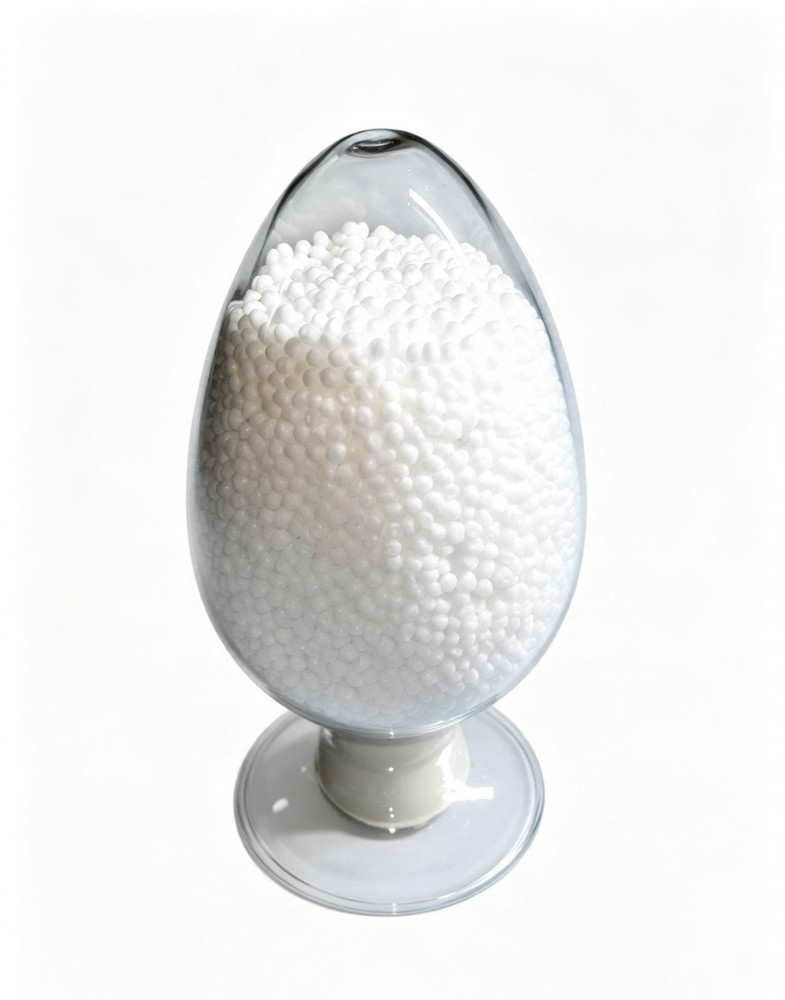
Resin-carrier masterbatch — UHMW polysiloxane dispersed in a thermoplastic resin (PE, PP, EVA, PA, etc.), produced by melt compounding and extrusion pelletizing. Active content of mainstream grades is typically 40%–50% (refer to the TDS of each specific grade).
The carrier is compatible with the matrix and melts together with it during processing, driving uniform pre-dispersion of the siloxane;
Because the carrier must match the matrix, it is substrate-specific — a PE carrier suits polyolefin systems, while engineering plastics require a corresponding carrier resin;
Supplied in pellet form: easy to meter, dust-free.
Silica-carrier products — polysiloxane adsorbed and anchored onto fumed silica. This category includes both powders and pellets:
The powder form is what is commonly called "silicone powder," typically graded at 40%, 50%, or 60% siloxane content;
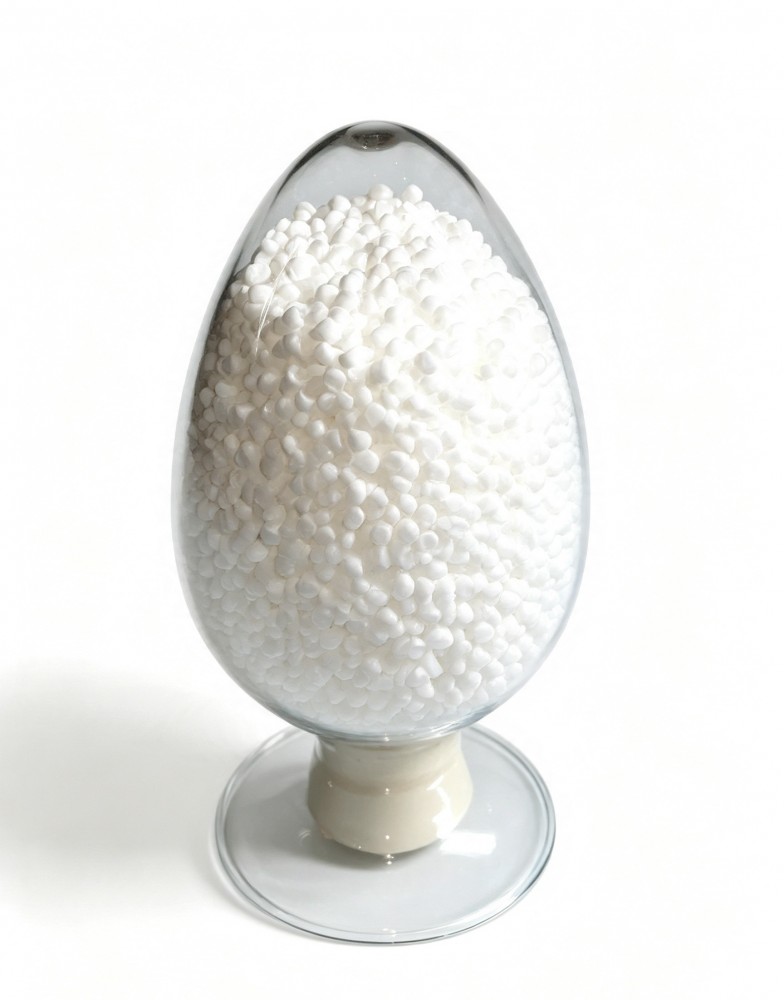
A representative pellet form is the Xiangxi DX05 series — a vinyl composite carrier pellet with 55±1% active silicone content, broadly compatible with EVA, TPE, TPR and other footwear material systems. After premixing with other ingredients, it can be melt-compounded directly in single- or twin-screw extruders.
Carrier-free or specialty systems — a small number of carrier-free or specialty products exist; before selecting one, confirm that it suits your dispersion process.
Bottom line: resin carrier → application-specific fit; silica carrier → broad-spectrum fit. This has nothing to do with whether the product is a pellet or a powder.
Compatibility — determined by the carrier. The fit of a resin-carrier product depends on how well its carrier resin is compatible with the matrix. A wrong choice ranges from poor dispersion at best to agglomeration, delamination, and surface defects at worst. Silica carriers do not rely on resin compatibility and offer broad applicability, making them suitable for operations that switch between substrates or run multiple grades on the same line — whether supplied as powder or pellets.
Processability — determined by form and content.
Pellets: easy to meter, dust-free; can be blended directly with resin pellets for injection molding, extrusion, or blow molding;
Powder: requires dust control and moisture management; when siloxane content is high and processing shear is insufficient, premixing and pelletizing first is recommended to avoid agglomeration, uneven dispersion, and surface blemishes;
Note: "powder must be pre-pelletized" is not absolute — high-content silica-carrier pellets (e.g., 60% grades) can also be compounded directly.
Dispersion and migration — each has its strengths. Resin carriers achieve pre-dispersion through melt miscibility and generally offer better batch-to-batch consistency. Silica carriers release the siloxane through shear; dispersion uniformity declines when shear is insufficient, but the active ingredient is firmly anchored in the matrix and is less prone to migration and blooming — a plus for downstream printing, coating, and assembly operations.
Performance focus — depends on content, molecular weight, and dispersion. As a general rule: low dosages (approx. 0.2%–1%) favor processing lubrication — improving flow, reducing torque, and aiding mold release; higher dosages (approx. 1.5%–3% and above) favor surface properties — lowering the coefficient of friction and enhancing slip and scratch resistance. Exact ranges vary by grade and system, so supplier test data should be the reference.
Flame-retardant synergy is not exclusive to "silicone powder." Silicone additives act synergistically with halogen-free flame-retardant (HFFR) systems such as aluminum hydroxide and magnesium hydroxide — improving flame-retardant dispersion, promoting charring, suppressing melt dripping, and raising the limiting oxygen index (LOI). This is an inherent effect of ultra-high-molecular-weight silicone and is not limited to powder form: at sufficient dosage, Xiangxi's PE-carrier silicone masterbatch likewise delivers excellent HFFR synergy, improving the dispersion of halogen-free flame retardants and promoting dense char formation.
"Powder has a higher proportion of active ingredient" does not hold up. Masterbatch typically contains 40%–50%; silica-carrier pellets can reach 60%; and powders commonly come in 40%, 50%, and 60% — the ranges overlap. Active content is a product-grade attribute, not a difference between powder and pellet dosage forms.
Powder-side risks: dust generation requiring dust-control measures during compounding; fumed silica readily absorbs moisture, so storage and drying need attention; silica's relatively high hardness causes some equipment wear over long-term use.
Masterbatch-side risks: carrier dilution effect — a higher dosage is needed to deliver the same amount of active silicone; the carrier resin may affect end properties (e.g., heat resistance, compatibility-sensitive systems); in thin-wall parts such as films, poor pellet dispersion can cause crystal points and fish eyes.
Shared risks: excessive dosage may impair downstream printing, coating, and bonding (industry data suggests verification above roughly 2%); unit prices cannot be compared directly — calculate cost per unit of active silicone together with the required dosage.
Rather than agonizing over "powder or pellet," ask in this order:
Q1 — What is the carrier? Is it compatible with our base resin?
Q2 — What are the active silicone content and molecular weight? These determine real efficacy, dosage, and dispersion difficulty — higher molecular weight favors wear resistance; higher content is harder to disperse.
Q3 — Do the shear conditions and process match? For low-shear direct molding, choose pre-dispersed products; the cost advantage of powder only holds when a high-shear pre-pelletizing step is available.
Q4 — What is the priority for end-use performance? Surface slip, processing flow, or flame-retardant synergy — each corresponds to different content and dosage ranges.
Q5 — What are the downstream processes and compliance requirements? Printing, coating, bonding, food contact, low VOC / low fogging — always validate on actual equipment.
There is no absolute winner between silicone powder and silicone masterbatch — only a question of fit. The right selection path is: first determine the compatibility range from the carrier, then set the processing approach from content and shear conditions, and finally set the dosage from the target end-use performance.
The next time someone tells you "masterbatch is application-specific, powder is universal," ask them one question in return — is it a resin carrier, or a silica carrier?
If you are still unsure which to choose, contact us and we will provide test-based recommendations tailored to your substrate, process, and performance goals.
Xiangxi New Material — A professional China manufacturer of Silicone Masterbatches and plastic additives. RoHS & REACH compliant options available.
Privacy Policy ·
AI Policy ·
Copyright ·
Sitemap
Copyright © 2016-2026 Xiangxi New Material Co., Ltd. All Rights Reserved.