

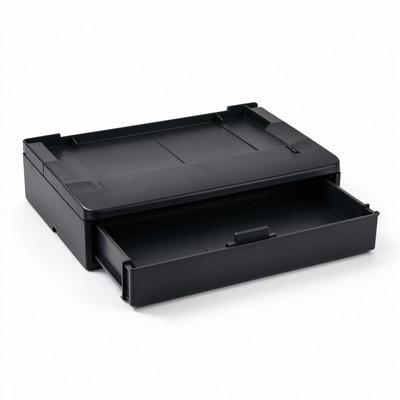
Copy paper is far more abrasive than it appears: clay-coated sheets carry kaolin and calcium carbonate, and every one dragged from a stack scores the tray surface at a shallow angle. Over the life of a printer, filled polypropylene trays develop permanent bright tracks exactly where the sheets run. Running DX853C at 1.5–2.5% raises the critical scratch load of the tray compound and improves mineral wetting, so the tracks form later and the surface retains less paper dust.
Mineral-paper cutting — the sheet edge loaded with pigment particles behaves like a fine cutting tool; because it moves at a shallow angle, the damage is a long shallow groove rather than a pit.
Filler whitening in the tray itself — the tray needs mineral reinforcement for rigidity, and every scratch debonds particles at the surface, turning a groove into a white line.
Flex while loaded — the tray carries several hundred sheets, so the scored skin is simultaneously under bending load; that combination opens the groove instead of letting it close.
| Route | Result | Trade-off |
|---|---|---|
| Texture the running surface | Hides tracks | Raises paper friction, adds noise |
| Lower-MFR, higher-MW resin | Moderate gain | Longer cycle, poor long-flow fill |
| Inserts or rails in another material | Tracks move off the visible face | Parts count and assembly cost |
| DX853C in the existing compound | Higher critical load, less whitening | None inside the recommended amount range |
All three grades are metered into polypropylene and PP/TPE systems inside the same 0.5–5% band; they differ in the part geometry and filler system each one is matched to.
| Product name | Appearance | Carrier resin | Recommended dosage (W/W) | Application scope |
|---|---|---|---|---|
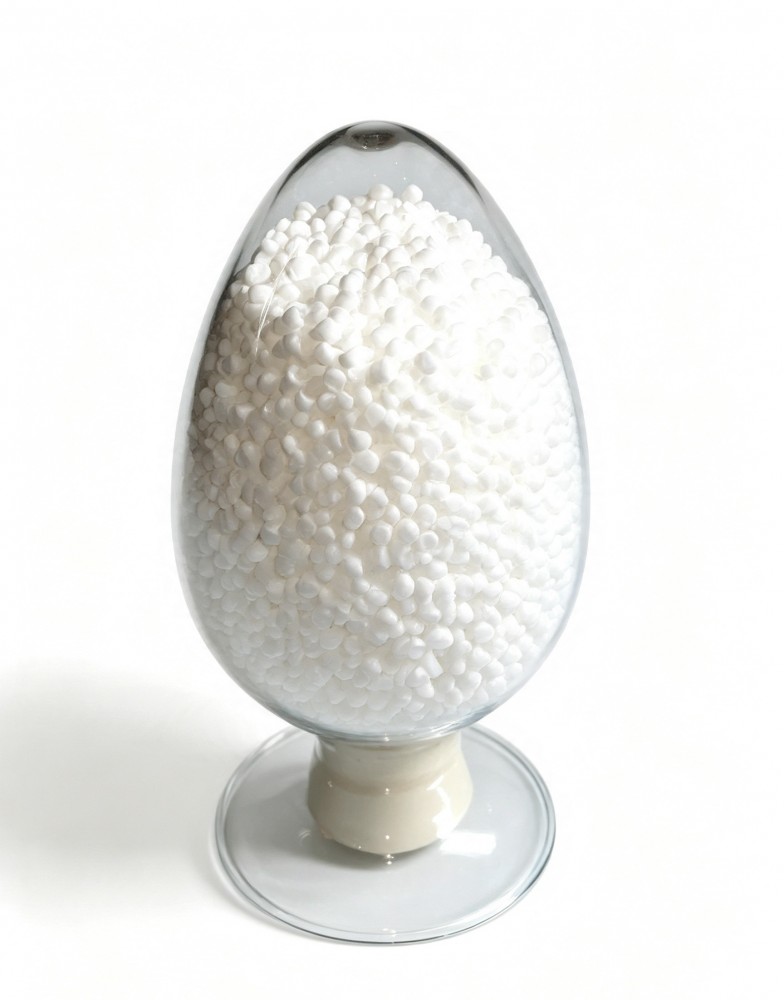
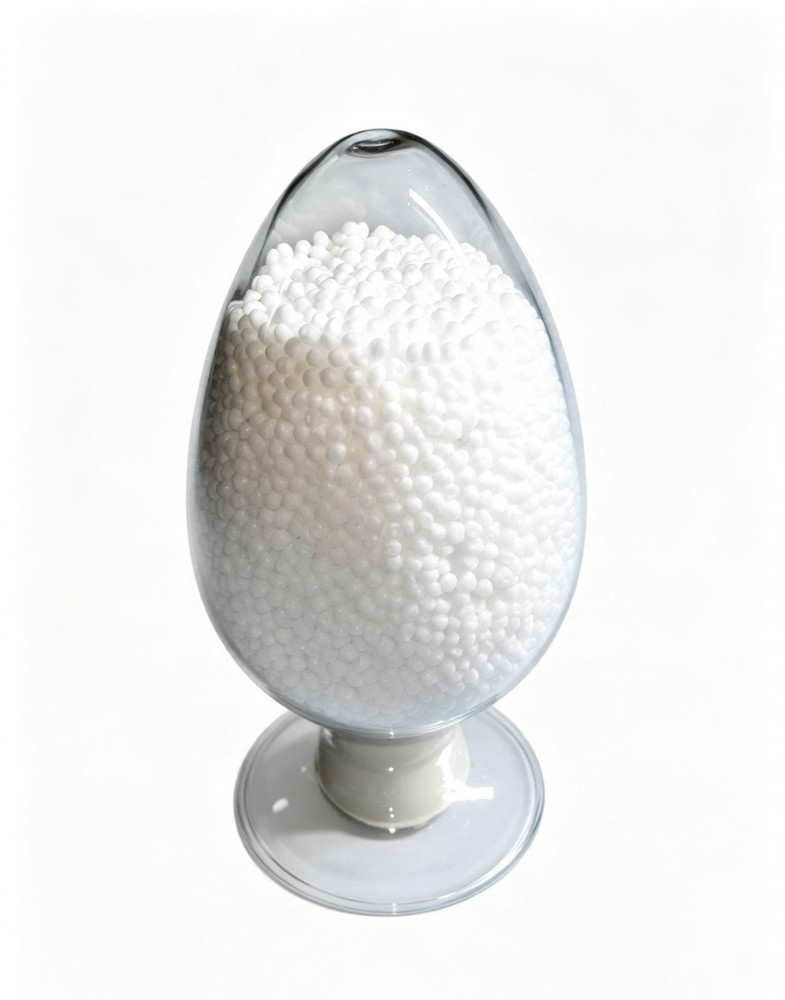
| DX853C | White pellet | PP+ | 0.5–5% | PP, TPE |
| DX8502A | White pellet | PP+ | 0.5–5% | PP, TPE |
| DX852 | White pellet | PP+ | 0.5–5% | PP, TPE |
DX853C — the grade for mineral-filled components carrying a mar requirement; the practical window here is 1.5–2.5%.
DX8502A — better suited to unfilled trays, guide flaps and other PP/TPE sets inside the paper path.
DX852 — pick it when the tray is a thin-wall extended unit moulded from high-flow polypropylene with a long flow path.
Feed the pellet at the throat with the filled compound; check a light-grey plaque for specks before releasing.
Start at 1.5% and step 0.5%; judge to the point where the track test stops improving, which is usually below 2.5%.
Do not alter tray flatness fixtures during the trial — dimensions determine sheet feeding and deserve clean measurement.
Reading Pick force should also be logged, since lower surface friction can change multi-feed behaviour.
Track formation cycle count — longer before the first visible line appears in your sheet-cycling rig.
ISO 19252 critical load — improves on the filled tray compound.
Pick and feed reliability — no increase in multi-feeds or misfeeds during jam testing.
Dust retention — paper dust wipes off more readily from a smoother, better-wetted surface.
Friction against the tray is only one input to the pick mechanism; the separation pad does the work. Validate with the standard jam and multi-feed test rather than assuming the change is harmful.
Both can coexist in polypropylene, although anti-static agents work at the surface. Check surface resistivity before and after, and re-test feeding once stabilised.
Yes. Telescopic sections see sliding contact against each other, so the lower friction is an advantage; verify that the detent positions still hold under transport vibration.
Around 2% for a mineral-filled compound. Higher loadings above about 2.5% seldom add visible benefit relative to their cost.
Dimensions come from tool and cooling and are unaffected; shrinkage is more often improved because the fill becomes more uniform. Confirm flatness on your gauge anyway.
ISO 9001 production with a certificate of analysis per lot, plus REACH and RoHS statements supported by SGS test reports.
Testing DX853C on your Printer Paper Tray? Send us your recipe and target — we return the matched grade, TDS and a 1 kg sample within 3 working days.

Xiangxi New Material — A professional China manufacturer of Silicone Masterbatches and plastic additives. RoHS & REACH compliant options available.
Privacy Policy ·
AI Policy ·
Copyright ·
Sitemap
Copyright © 2016-2026 Xiangxi New Material Co., Ltd. All Rights Reserved.