
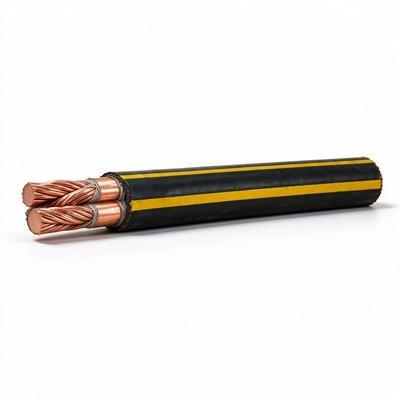
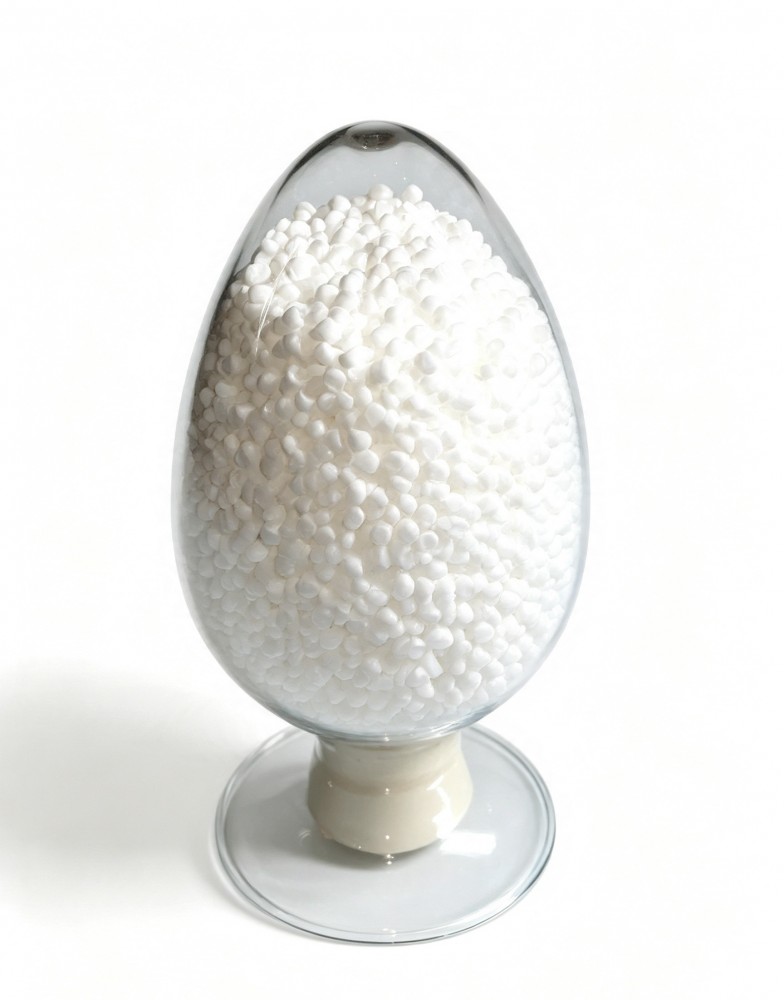
Mining cable is dragged over rock, pinched under machinery and coiled in mud, so the sheath is the component that decides service life — cut-through and abrasion failures, not conductor failures, send most trailing cables to the scrap pile. Xiangxi DX753A — white pellet silicone masterbatch on a PE+ carrier at 2–3%, typically 2.5% — lowers the sheath's friction and wear rate, cuts extrusion torque on heavily filled flame-retardant compounds, and disperses the filler evenly enough that the sheath resists tearing rather than splitting along filler agglomerates.
Cut-through from sharp rock — the sheath is loaded over a small contact area; any agglomerate in the compound becomes the point where the cut starts.
Abrasive drag — pulling cable over grit is a three-body wear process, and a high-friction, rough sheath removes material far faster than a smooth one.
Filler-driven viscosity — MSHA and ICEA flame requirements push filler loading up, which raises torque, raises melt temperature and leaves less margin before scorch.
| Route | Wear result | Trade-off |
|---|---|---|
| Thicker sheath | More material to wear through | Heavier cable, larger reel, higher cost |
| Harder sheath compound | Better cut resistance | Poorer flexibility, harder to coil in cold |
| Change base polymer to CPE or PCP | Tougher | New compound, new approvals, higher cost |
| Surface lubricant coating | Short-term drag reduction | Washes off, contaminates the mine |
| DX753A at 2.5% | Lower wear rate, better dispersion | No change to flame approval or flexibility |
| Product name | Appearance | Carrier resin | Recommended dosage (W/W) | Application scope |
|---|---|---|---|---|
| DX750 | White pellet | PE+ | 0.5–3% | PE, TPE |
| DX751B | White pellet | PE+ | 0.5–3% | PE, TPE |
| DX752B | White pellet | PE+ | 0.5–3% | PE, TPE |
| DX752A | White pellet | PE+ | 0.5–3% | PE, TPE |
| DX753A | White pellet | PE+ | 0.5–3% | PE, TPE |
| DX753 | White pellet | PE+ | 0.5–3% | PE, TPE |
| DX755A | White pellet | PE+ | 0.5–3% | PE, TPE |
| DX752C | White pellet | PE+ | 0.5–3% | PE, TPE |
DX753A is the choice for crosslinked or heavily worked mining sheaths: it keeps its effect through the crosslinking step and through a long service life, rather than migrating out after a few months. For an uncrosslinked TPE sheath, DX753 gives the same wear and friction benefit with a closer match to the elastic matrix. If the compound is a halogen-free sheath above about 55% filler, DX755A is the one that will actually move the torque, and for lower-voltage lightly filled sheaths DX751B is sufficient at 1.0–2.0%.
Dry-blend with the sheath compound at the hopper; no pre-drying needed and the pellet will not bridge in a big mining-line hopper.
Start at 2.0%, then 2.5%, then 3.0%, logging motor load, head pressure and melt temperature at each level.
Cut sections at each step and inspect filler dispersion under magnification — uneven dispersion is the root cause of most cut-through failures.
Keep the flame-retardant package and cure system unchanged for the first trial, so the masterbatch is the only variable.
Abrasion: lower mass loss on ISO 4649 or your own drag-over-grit rig, run on the finished sheath.
Tear and cut resistance: higher force to propagate a cut, with fewer filler-initiated failure points.
Torque and melt temperature: lower at the same output, giving back scorch margin.
Flame approval: MSHA or ICEA flame results unchanged on the finished cable.
Start at 2.5%. Crosslinked, heavily filled sheaths usually settle between 2.5% and 3.0%; lighter uncrosslinked compounds respond at 1.5–2.0%.
It contributes no halogen and no fuel, so the flame behaviour is set by your existing package. Re-test the finished cable to the applicable procedure before shipping.
The friction reduction is moderate and the sheath stays elastomeric, so clamp retention is unaffected. Verify pull-out on your own anchorage design.
Yes where the insulation is PE-based XLPE; DX752B at 1.0% is the usual starting point for that layer.
Yes. The siloxane stays dispersed instead of blooming out, so the wear rate measured on a new sheath is the rate you keep in service.
Yes. Xiangxi wire and cable grades are RoHS and REACH compliant, SGS tested, produced under ISO 9001, and shipped with a COA on every batch.
Testing DX753A on your Mining Power Cable Sheath? Send us your recipe and target — we return the matched grade, TDS and a 1 kg sample within 3 working days.
Xiangxi New Material — A professional China manufacturer of Silicone Masterbatches and plastic additives. RoHS & REACH compliant options available.
Privacy Policy ·
AI Policy ·
Copyright ·
Sitemap
Copyright © 2016-2026 Xiangxi New Material Co., Ltd. All Rights Reserved.