

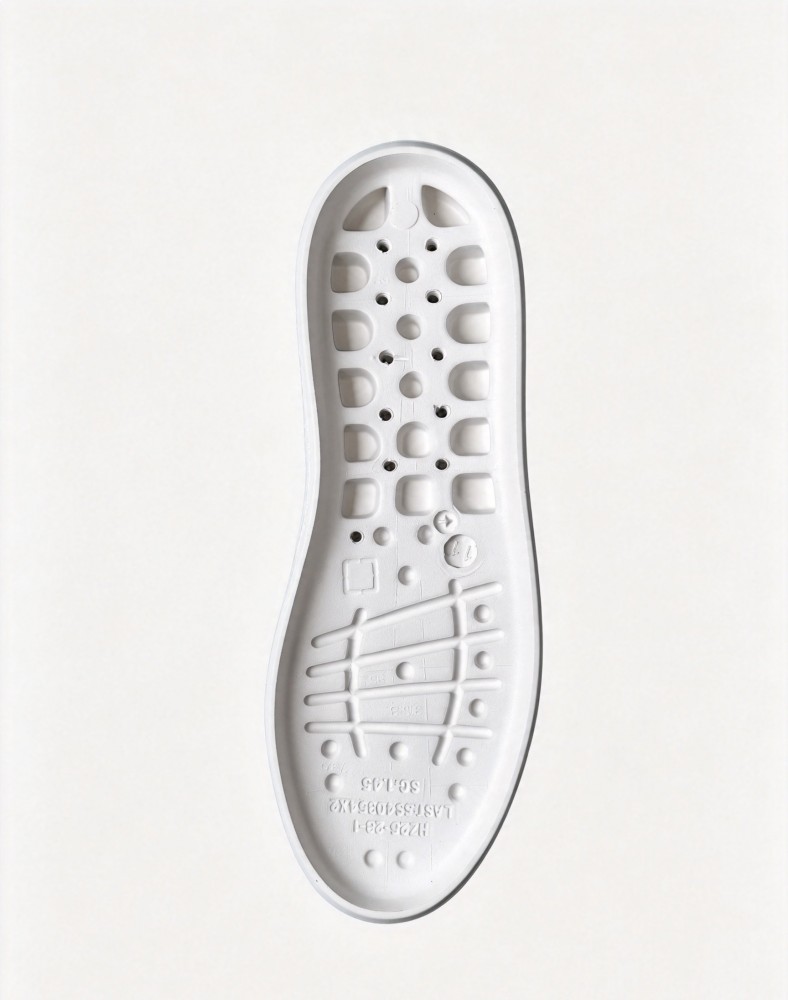
A yoga mat is returned when its surface pills and sheds, not when it compresses out. Xiangxi's N5015 anti-abrasion masterbatch, an EVA+ carrier grade dosed at 3–8%, reduces DIN abrasion loss by about 30% in foamed EVA and TPE mat stock, holding density, embossing definition and the grip that studios actually complain about when it changes.
Open-cell skin — the surface skin of foamed EVA or TPE is thin and unsupported, so bare feet strip the skin and leave the core exposed to further shedding.
Sweat and cleaning agents — moisture and studio wipes plasticise the top layer, which then rubs off far faster under the same movement.
Rolling abrasion — roll, unroll and move: the mat rubs against the floor with every practice, and grit on a studio floor turns this into grinding.
| Route | Abrasion gain | Trade-off for the user |
|---|---|---|
| Thicker or higher-density foam | 10–20% | Heavier mat, higher logistics cost |
| Fabric or film lamination | 15–25% | Costly, and the layer delaminates at the edges |
| Increase crosslink density | 10–15% | Harsher feel, lower cushioning and grip |
| N5015 anti-abrasion masterbatch | ≈30% lower DIN loss | Density, hardness and embossing unchanged |
| Product name | Appearance | Carrier resin | Recommended dosage (W/W) | Application scope |
|---|---|---|---|---|
| N5015 | White pellet | EVA+ | 3–8% | EVA, TPR |
| DX051 | White pellet | EVA+ | 3–8% | EVA, TPR |
| DX052P | White pellet | EVA+ | 3–8% | EVA, TPR |
| DX053 | White pellet | EVA+ | 3–8% | EVA, TPR, TR, PVC |
| DX063 | White pellet | EVA+ | 3–8% | EVA, TPR — supercritical foaming |
| DX653A | White pellet | EVA | 3–8% | EVA, TPR |
N5015 — the economy choice for large-area mats sold on price, where a small addition must still be felt in service life.
DX653A — for mats extruded from a straight EVA compound with no TPR phase, where carrier compatibility is the deciding factor.
DX063 — the grade to use when the mat is made by supercritical foaming, which is increasingly common for premium, low-odour products.
DX052P — the practical option for converters who run many colours and printed patterns in short campaigns.
DX051 — suited to TPE-blend mats that need slightly stronger melt strength during extrusion.
Feed the free-flowing white pellet with the polymer before the blowing agent; it needs no drying and handles like standard granular masterbatch.
Start at 3% and work up in 1% steps; mats usually settle at 4–5%, and thin travel mats can use the lower half of the range.
If the mat is a high-grip product, keep the dosage modest and check surface friction as well as abrasion — do not optimise one at the expense of the other.
Confirm foam density and cell structure at each dosage step before fixing the recipe, then compare DIN (ISO 4649) results with the MDR curve we supply.
DIN abrasion loss (ISO 4649): around 30% lower at 4–5% dosage on foamed EVA mat stock.
Pilling and shedding: the surface stays intact after repeated abrasion cycles instead of forming pills.
Hardness and rebound: within batch variation, so cushioning and grip feel unchanged.
Foam appearance: finer cells and fewer surface pinholes, which also improves printed and embossed detail.
Not at 3–5%, the range most mats use. Surface grip is part of every mat trial we support: we ask you to record both DIN loss and friction on the same sheet, so a wear gain never hides a grip loss.
The grades are REACH and RoHS compliant and SGS tested under ISO 9001 production. For skin-contact claims, run your own restricted-substance screening on the finished mat.
It generally improves both — finer cells and a smoother surface hold embossing detail and print definition. No surface treatment or primer change is needed.
Start at 4%. Thick mats have more wear allowance, so you usually do not need the top of the range; add 1% at a time only if the DIN result keeps improving.
No new odour source is introduced: the carrier is EVA-based and the pellet is white. Low-odour products are one reason converters pair it with supercritical foaming and DX063.
Send your polymer, density target and thickness; we return the matched grade, TDS and a 1 kg sample within 3 working days.
Need N5015 data on your own yoga Mat formula? Mail the base recipe and the abrasion figure you must hit; our lab matches the grade, issues the TDS and ships a 1 kg sample in 3 working days.

Xiangxi New Material — A professional China manufacturer of Silicone Masterbatches and plastic additives. RoHS & REACH compliant options available.
Privacy Policy ·
AI Policy ·
Copyright ·
Sitemap
Copyright © 2016-2026 Xiangxi New Material Co., Ltd. All Rights Reserved.