
A comfort pad is sold on the first step and judged over a hundred kilometres. Pads that go flat, or that leave an oily halo on the EVA midsole, are the two reasons a comfort story fails at retail. Xiangxi's thermoplastic silicone vulcanizate (TP-SiV) series — general moulding grade holds rebound in the heel strike zone, does not migrate into EVA or PU, and is loaded at the level matched to the softness your last allows (see TDS).
Compression set at the heel — Peak pressure sits on a 30 mm circle; a pad that takes a set there is felt as a hard spot at about the 200 km mark.
Plasticiser migration into EVA — Free oil moves from the pad into the foam, softening the midsole locally and leaving a visible halo where the pad sat.
Bonding and slippage — A pad that slides in the sock liner bunches under the forefoot, which is felt as a ridge rather than as a pad.
| Route | Feel and rebound | Trade-off |
|---|---|---|
| PU gel insert | High initial softness | Heavy, sets quickly, hard to bond |
| EVA pad | Light, cheap | Compresses permanently, little rebound |
| TP-SiV general moulding grade | Rebound retained, light | Pad geometry must match the last |
| Product name | Appearance | Carrier resin | Recommended dosage (W/W) | Application scope |
|---|---|---|---|---|
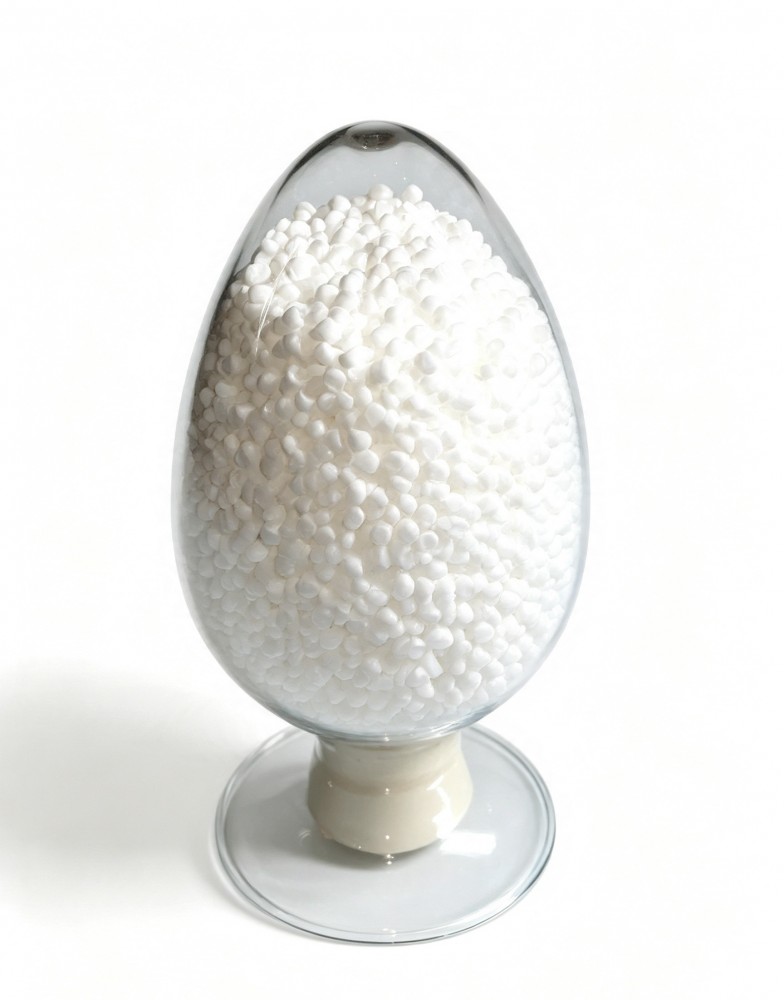
| Xiangxi TP-SiV series — general moulding grade | White to off-white pellet | PP | Grade matched to hardness target — see TDS | Soft parts, trim, cushioning |
| Xiangxi TP-SiV series — soft-touch grade | White to off-white pellet | PP | Grade matched to hardness target — see TDS | Grips, skin-contact parts |
| Xiangxi TP-SiV series — sealing grade | White to off-white pellet | PP | Grade matched to compression-set target — see TDS | Gaskets, bellows, seals, pads |
| Xiangxi TP-SiV series — food-contact grade | White to off-white pellet | PP | Grade matched to hardness target — see TDS | Food and infant-contact parts |
General moulding grade at the soft end for the heel pad; the forefoot pad can run firmer so it does not bunch.
For a two-shot insole, keep both materials in the family so the pad bonds in the mould instead of being glued.
Ask for the migration data against EVA and PU, which is a footwear-specific requirement rather than a generic property.
Match the grade to the sock-liner fabric if the pad is laminated, since adhesion differs by textile.
Keep the pad thickness at 2–5 mm and dome it over the heel cup; a flat pad relies on the sock liner for location.
Mould a locating rim if the pad is inserted rather than bonded, so it cannot slide forward under braking.
Bond with an adhesive specified for low-surface-energy thermoplastics, and abrade the pad face first.
Test on a walking robot or a wear panel, not on a compression platen alone — the load path in a shoe is not uniaxial.
Compression set: 24 h at 40 °C, then thickness recovery against the incumbent pad.
Rebound: energy return on a drop test at heel-strike loading.
Migration: halo width and hardness change in the EVA after 4 weeks at 50 °C.
Slip: pad displacement after a 10 km wear trial.
That mark is plasticiser migration; a compound without free oil avoids it, and a 4-week 50 °C contact test proves it before production.
Yes, in a two-shot with the sock liner or the EVA body, which also removes the gluing step and the slip failure.
Usually 2–5 mm depending on the last and the drop; thicker is not better because it changes the shoe's fit and heel height.
Ask for the low-temperature set data — a pad that stiffens below 5 °C loses the comfort claim in winter markets.
Pigments must be screened for rub fastness, since the pad is visible and handled; ask for the fastness data with the colour match.
Testing the Xiangxi TP-SiV series on your Shoe Insole Gel Pad? Send us your recipe and target — we return the matched grade, TDS and a 1 kg sample within 3 working days.
Xiangxi New Material — A professional China manufacturer of Silicone Masterbatches and plastic additives. RoHS & REACH compliant options available.
Privacy Policy ·
AI Policy ·
Copyright ·
Sitemap
Copyright © 2016-2026 Xiangxi New Material Co., Ltd. All Rights Reserved.