

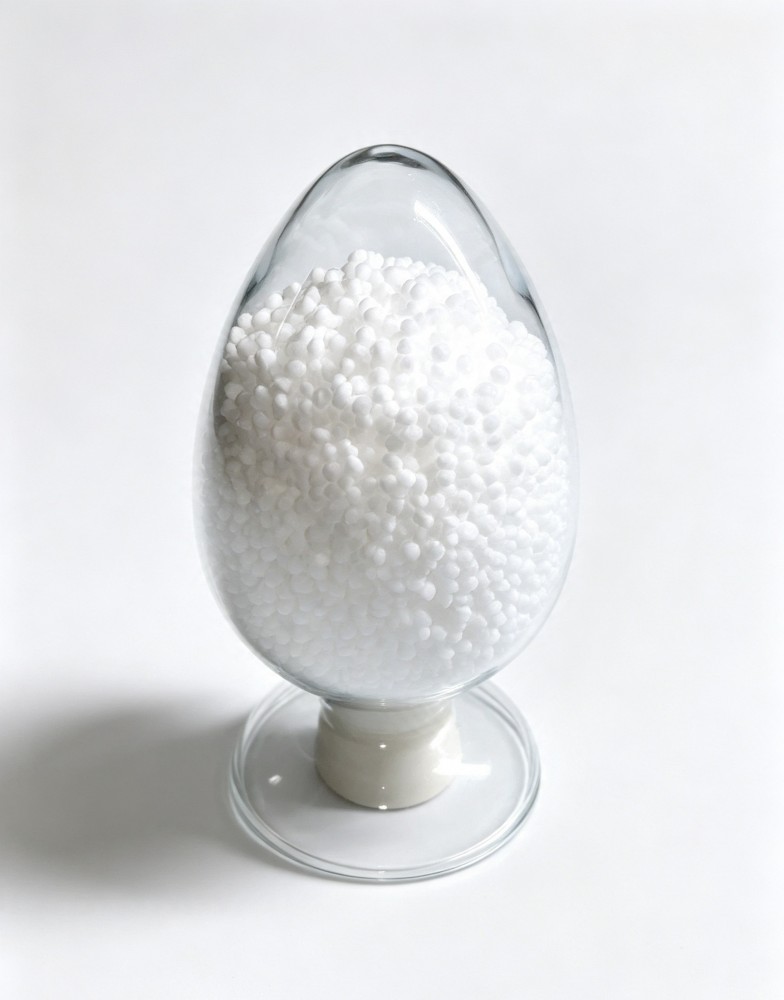
Metallized BOPP depends on a clean, pinhole-free surface for both the aluminium bond and the oxygen barrier. Gels, crystal and die-lip build-up show up as sparks, weak spots and lost barrier. Xiangxi's BOPP/CPP film masterbatch series — PP carrier grade, dosed at 0.5–3% in the BOPP, disperses finely to cut gels and die fouling while holding COF, so the metallizer runs longer between cleans and the barrier stays intact.
Gels and crystals — poorly dispersed additive forms hard spots that become pinholes after aluminium deposition.
Die-lip build-up — slip residues bake on the die lip, so the web thickness waves and the coat is uneven.
COF creep — slip that migrates off the surface lifts the aluminium and raises COF at the pouch former.
| Option | Gel / die | Trade-off |
|---|---|---|
| More loose slip powder | Worse | Gels, die fouling |
| Higher filter, slower line | Marginal | Throughput loss |
| Frequent die clean | Clean but costly | Downtime, scrap |
| PP carrier film masterbatch | Lower gels, less fouling | No barrier change |
| Product name | Appearance | Carrier resin | Recommended dosage (W/W) | Application scope |
|---|---|---|---|---|
| Xiangxi BOPP/CPP film masterbatch series — PP carrier grade | White pellet | PP | 0.5–3% | BOPP |
| Xiangxi BOPP/CPP film masterbatch series — PE carrier grade | White pellet | PE | 0.5–3% | CPP |
| Xiangxi BOPP/CPP film masterbatch series — powder grade | White pellet | Silica | 0.5–3% | BOPP, CPP |
PP carrier grade — the fit for BOPP before metallization; fine dispersion protects the aluminium bond.
PE carrier grade — for CPP metallized sealants.
powder grade — for high-filler pre-compounds, not standard metallizing.
Add at the BOPP line throat or side stuffer; free-flowing, no pre-dry.
Start at 0.5% and track gel count and COF (ASTM D1894); 1–2% is typical.
Check pinhole rate after metallization before a full campaign.
Side gains: longer die-lip run, fewer sparks, steadier barrier.
Gel count: lower versus a loose-powder slip.
Die-lip run time: longer between cleans.
COF (ASTM D1894): stable, no post-metallization creep.
OTR / pinholes: no rise in barrier or pinhole rate.
No — it is finely dispersed, so it does not form the hard gels that become pinholes; verify pinhole rate after a trial.
Yes, the pellet form leaves far less baked residue on the lip than loose slip powders, so clean intervals stretch.
Used in band it stays locked in the PP and does not migrate to the metal surface.
Switch to the PE carrier grade for the CPP ply; keep PP grade for the BOPP.
Start at 0.5%, raise in 0.5% steps and approve on gel count and COF.
The PP carrier grade is for food-contact BOPP and ships with TDS and COA; confirm your regulation.
Testing Xiangxi BOPP/CPP film masterbatch series — PP carrier grade on your Metallized BOPP Film? Send us your recipe and target — we return the matched grade, TDS and a 1 kg sample within 3 working days.

Xiangxi New Material — A professional China manufacturer of Silicone Masterbatches and plastic additives. RoHS & REACH compliant options available.
Privacy Policy ·
AI Policy ·
Copyright ·
Sitemap
Copyright © 2016-2026 Xiangxi New Material Co., Ltd. All Rights Reserved.