
Silicone (UHMW siloxane) masterbatch is usually more expensive per kilogram than conventional slip agents, but on a total-cost basis it is frequently the cheaper solution: at only 2%–3% loading it delivers durable low-friction surfaces, a 10%–20% extrusion throughput gain, and scratch or wear performance that otherwise requires higher-cost PTFE-filled or heavily formulated compounds. Compared with amide slip additives it lasts longer; compared with PTFE micropowder it avoids costly filler loading and abrasive wear debris; compared with external oil or grease lubrication it eliminates re-lubrication labor. The economic case is strongest on visible PP interior parts, PE cable lines and dry-running engineering wear parts.
Three additive families are typically compared when designing a low-friction polymer surface:
Amide slip additives (erucamide, oleamide): cheap per kilo, low dosing, but bloom quickly and exhaust after washing or abrasion.
PTFE micropowder filled compounds: excellent low COF and wear, but high cost per kilo, often needs 10%–20% loading, and generates abrasive wear debris.
UHMW siloxane masterbatch: mid-range per-kilo cost, low dosing at 1.5%–3%, durable surface film, no free oil.
The comparison below examines each of the three use cases where the total-cost math is clearest.
Traditional ways to prevent scratch whitening on PP interiors include applying a soft-touch paint layer, increasing talc content to stiffen the surface, or using a more expensive TPO skin. Each adds process steps or raw-material cost. A 3%–5% loading of DX752B drops the surface COF from roughly 0.4 to 0.2, which directly addresses the plowing mechanism that causes whitening, and does so without a painting step. Even though the masterbatch carries a higher per-kilo price than neat PP, the elimination of a spray-paint line, its scrap rate and its oven energy usually makes the total part cost lower. For a typical instrument-panel substrate, the additive cost at 4% loading is a small fraction of the paint-and-drying cost it replaces, and the part remains recyclable without a coating layer.
When a cable or pipe line is at capacity, the traditional answer is either to accept the output or to invest in additional extruder hours. Adding 1.5%–2.5% of a silicone masterbatch reduces torque and head pressure and lifts line throughput by 10%–20% at the same screw speed. On a line already running near motor limit, that extra throughput is effectively free incremental capacity: no capex, no extra crew shift, no additional footprint. The additive cost per kilometer of cable is small relative to the revenue from the additional output, and the cooler head temperature that accompanies the lubricity gain also reduces scrap from scorch or gel in cross-linked PE and HFFR compounds.
The comparison to amide slip agents is also favorable here. Erucamide and oleamide are cheaper per kilo, but they bloom out quickly and the surface effect does not persist through repeated coiling, uncoiling and aging. Siloxane's reservoir-in-the-bulk behavior means the extrusion lubricity and surface finish remain consistent over years of service, which matters for cable jackets that must slide through conduits without squeaking or galling.
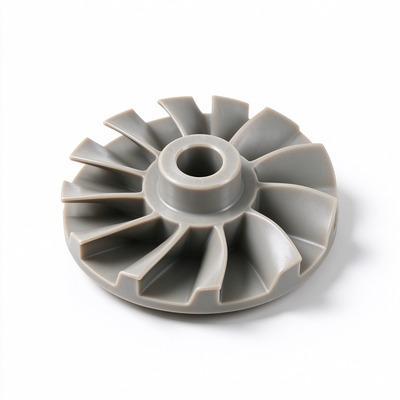
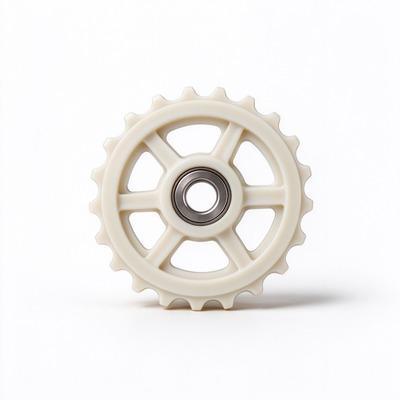
Dry-running gears, sliders and bearing cages traditionally use PTFE-filled PA or POM to reach low friction. PTFE works, but at loadings of 10%–20% it is expensive, increases density, and the PTFE wear debris is abrasive in sensitive machinery. A silicone-modified PA or POM at 2%–3% loading reaches a COF of about 0.1, which is comparable for light-to-moderate sliding duty, at a fraction of the additive cost. Wear debris stays compatible with the surrounding polymer, and the part runs cooler and more quietly.
The alternative of applying grease or oil externally avoids additive cost but adds labor, re-lubrication intervals, and contamination risk in food-contact, textile, printing and clean-equipment applications. A self-lubricating siloxane-modified part removes that maintenance loop entirely. For equipment builders, the saving is not only per-part material cost but also warranty returns caused by seized or squealing sliders.
A credible cost model should include four line items, not just additive price:
Raw-material cost at the chosen loading (2%–3% typical).
Process cost: throughput gain (10%–20% on PE lines), cycle-time gain on injection, scrap-rate change.
Downstream process elimination: paint, printing pretreatment, external grease application.
Durability cost: replacement of cheap amide slip that has exhausted after abrasion or washing.
When those four items are combined, siloxane masterbatch usually wins on visible PP parts, PE extrusion at capacity, and dry-running engineering wear parts. It is less cost-justified on low-requirement, disposable packaging where a cheap amide slip is adequate, and it does not replace PTFE in heavy-load, high-temperature continuous-duty applications where a hybrid formulation is still the safer engineering choice.
A: Because it works at 2%–3% loading rather than 10%–20%. Even though per-kilo cost is higher, the amount used is several times smaller, and the finished part avoids PTFE's density penalty and abrasive wear debris.
A: Erucamide and oleamide are inexpensive and bloom quickly, but they exhaust after repeated abrasion, washing or aging. UHMW siloxane is a reservoir in the bulk and keeps replenishing the surface film, which matters for products that must perform over years rather than days.
A: A 10%–20% throughput gain at the same screw speed is typical at 1.5%–2.5% loading. On a line that is already at capacity, that extra output is incremental revenue without additional capex, which almost always makes the additive self-funding.
A: No. It is a polyolefin-compatible additive and does not introduce a foreign polymer layer the way paint or TPU film does. Regrind from siloxane-modified PP or PE can be fed back at standard regrind ratios, with a slight dosage top-up as needed.
A: Yes. Masterbatches from Xiangxi New Materials are formulated to meet EU REACH and RoHS requirements, including typical 1000 ppm-type concentration limits, and are produced under an ISO 9001 quality system at an annual capacity of about 20,000 tonnes. They are routinely used in compounds shipped to European, Asian and other regulated markets.
Xiangxi New Material — A professional China manufacturer of Silicone Masterbatches and plastic additives. RoHS & REACH compliant options available.
Privacy Policy ·
AI Policy ·
Copyright ·
Sitemap
Copyright © 2016-2026 Xiangxi New Material Co., Ltd. All Rights Reserved.