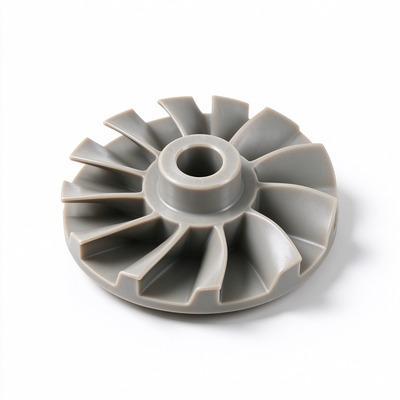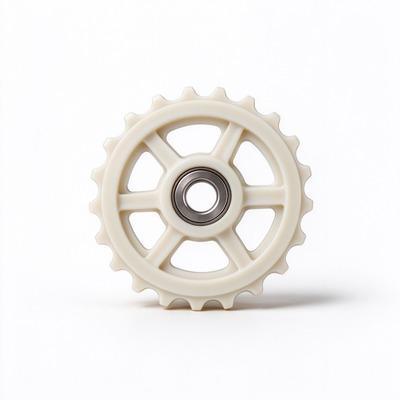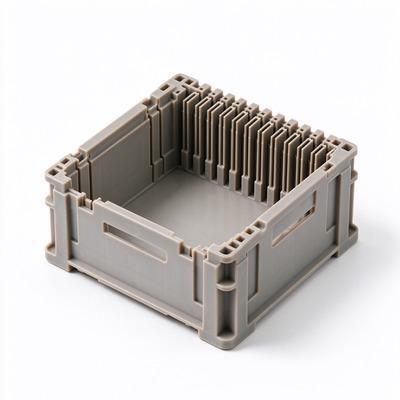

Silicone (UHMW siloxane) masterbatch behaves differently on each polymer substrate, and the loading, expected benefit and even grade selection should follow the base resin rather than a universal recipe. The strongest, most repeatable results are seen on PP at 2%–5% for scratch resistance, PE at 1.5%–2.5% for extrusion lubricity, PA/POM/PC engineering plastics where COF can fall to ~0.1, and TPE/EVA shoe materials at 2%–4%. This guide compares those four substrate families side by side so that the correct grade, dosage and target property are chosen on the first trial.
Siloxane additives work by migrating to the melt surface during cooling and forming a low-energy film. The speed and completeness of that migration depend on the polarity, crystallinity and melt viscosity of the host polymer. Non-polar polyolefins (PP, PE) are chemically similar to siloxane and allow steady, controlled bloom. More polar engineering polymers such as PA and POM create a sharper contrast between the host matrix and the siloxane, so the surface film forms quickly and the friction drop is more dramatic. TPE and TPU substrates, which are already soft, benefit mainly from abrasion and slip performance rather than hard-surface scratch resistance. These differences explain why a dosage that is perfect on PP may be excessive on PE and marginal on PA.
PP is the largest volume substrate for silicone masterbatch in the automotive and appliance sectors. The priority is scratch and mar resistance on visible parts such as door trims, center consoles, pillar covers and washing-machine lids. The recommended product is DX752B at 3%–5% loading. At this level, the surface coefficient of friction falls from a typical ~0.4 to ~0.2, which is the measurable cause of reduced whitening under fingernail or stylus abrasion. Because PP compounds often contain talc for stiffness, the upper end of the range is commonly required: a 20% talc-filled PP interior usually needs 4%–5% DX752B rather than 3%.
Processing is straightforward: PP melt temperatures of 190°C–230°C sit comfortably inside the masterbatch thermal stability range of roughly -40°C to 280°C. No special drying is required for the masterbatch itself, although hygroscopic fillers and reinforcements should still be dried per their own specifications. Cycle-time gains from improved demolding are modest but real, typically allowing 5%–10% faster ejection on deep-draw PP parts.
On PE, the value of silicone masterbatch is primarily processing lubricity rather than visual scratch performance. Typical applications are cable insulation and jacketing, HDPE pipe, geomembrane and thin-profile extrusion. A loading of 1.5%–2.5% of the general-purpose DX05 is the standard. At this dosage, extrusion torque and head pressure drop enough to deliver a 10%–20% line-throughput gain at the same screw speed, or the same throughput at lower motor load and a few degrees cooler melt temperature.
The cooler head temperature is especially valuable in cross-linked PE and halogen-free flame-retardant cable compounds, which already run close to scorch limits. Surface finish on extruded PE profiles also improves, with reduced die lines and less shark-skin. The main caveat is that over-dosing above ~3% can interfere with downstream printing, ink bonding or tape adhesion, so PE compounds should be held at the lower end unless a specific processing bottleneck justifies more.
In engineering plastics, silicone masterbatch is used to convert structural parts into self-lubricating wear components: gear wheels, bearing cages, slider pads, conveyor guides and printer/internal machinery parts. At typical loadings of 2%–3% in PA6, PA66, POM or PC, the surface friction coefficient can fall to roughly 0.1, a level normally associated with PTFE-filled compounds but achieved without the cost and wear-debris problems of PTFE. Abrasion resistance improves substantially under dry-running, unlubricated conditions, and the lower running noise is a welcome side effect in office-equipment and home-appliance gears.
Because PA is hygroscopic, the compound should be dried to the usual 0.1% moisture target before processing; the masterbatch itself does not change that requirement. Thermal stability up to about 280°C covers standard PA and PC melt ranges, although high-temperature PA grades processed above 300°C should be confirmed with the supplier before running. The outcome on engineering substrates is typically a longer service life for sliding parts and a reduced need for external grease or oil lubrication, which is valuable in food-contact, textile and clean-equipment applications where oil contamination is forbidden.
Soft substrates are a fourth, distinct case. On EVA midsoles, TPU outsoles and rubber shoe compounds, the target is not scratch resistance but controlled slip and abrasion on the walking surface. The dedicated 207B grade is dosed at 2%–4%, lowering the dynamic coefficient of friction on the sole compound from roughly 0.55 to about 0.35 and improving DIN abrasion loss. The result is a sole that releases cleanly on tile and wet floors rather than grabbing and squeaking, while maintaining the flex and rebound properties expected from EVA or TPU.
Because shoe compounds are often co-injected or laminated with fabrics and adhesives, dosage should be tuned so that the outer walking surface benefits without making bonding surfaces too slippery. A common production approach is to put the higher loading in the outsole skin and a lower loading in the midsole or bonding layer.
PP interiors / appliance shells: DX752B, 3%–5%, target COF ~0.2 from ~0.4.
PE cable / pipe / profile: DX05, 1.5%–2.5%, target 10%–20% throughput gain.
PA / POM / PC wear parts: DX05, 2%–3%, target COF ~0.1.
TPE / EVA / rubber soles: 207B, 2%–4%, dynamic COF 0.55 → 0.35.
A: A general grade such as DX05 will deliver some benefit on all of them, but optimized performance comes from using the right grade: DX752B for visible PP scratch resistance, 207B for shoe-sole slip and abrasion, and DX05 as the general-purpose workhorse for PE extrusion and engineering-plastic lubrication.
A: On PE the main target is processing lubricity, which is achieved at 1.5%–2.5%; on PP the main target is visual scratch resistance on visible surfaces, which needs a thicker, more durable surface film and therefore 3%–5% on DX752B.
A: Yes, but recycled PP with variable MFI and contamination usually needs the upper end of the range, around 2.5%–3% on DX05, because lot-to-lot viscosity variation weakens film formation. A short trial on the actual recycled stream is recommended before locking the dosage.
A: It often does for light-to-moderate sliding duty, where silicone-modified PA reaches COF ~0.1 with cleaner wear debris and lower noise. For heavy, high-load or continuous-temperature applications, a hybrid formulation combining siloxane with a small amount of PTFE or aramid fiber is still the conservative choice.
A: The masterbatches are formulated to meet EU REACH and RoHS requirements, including typical 1000 ppm-style concentration-limit expectations for regulated substances. Grades produced by Xiangxi New Materials, with an annual capacity of about 20,000 tonnes and ISO 9001 quality management, are routinely supplied to compounders serving European and Asian markets; final regulatory sign-off remains the compounder's responsibility against the specific end use.
Xiangxi New Material — A professional China manufacturer of Silicone Masterbatches and plastic additives. RoHS & REACH compliant options available.
Privacy Policy ·
AI Policy ·
Copyright ·
Sitemap
Copyright © 2016-2026 Xiangxi New Material Co., Ltd. All Rights Reserved.