
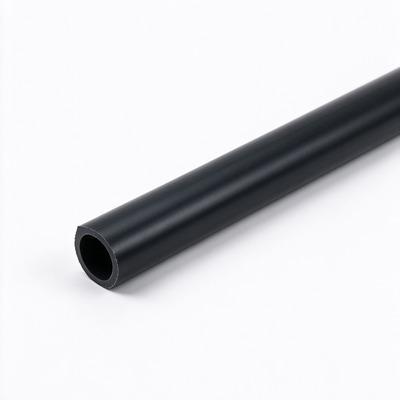
HDPE pressure pipe runs 24/7 and any die build-up or torque spike stops a whole line. Xiangxi's DX205B non-carrier silicone masterbatch — siloxane on silica, no carrier, dosed at 0.5–1.5% — lowers melt viscosity and die-land friction so extruder torque drops 10–20% and the pipe surface stays clean and scratch-resistant through long campaigns.
Melt die-land drag — HDPE at high shear rate drags on the die, raising surface roughness and inviting melt fracture at high line speed.
Pigment and filler agglomeration — black-pipe carbon masterbatch clumps into streaks and weak spots along the wall.
Long-run plate-out — stabiliser and antioxidant migrate to the die, building up and printing surface lines down the pipe.
| Route | Effect | Trade-off |
|---|---|---|
| Higher melt temperature | Faster flow | More degradation, more energy |
| External die lubricant | Quick fix | Contamination, cleanup |
| Wider die gap | Less shear | Off-spec wall, more material |
| DX205B 0.5–1.5% | Lower torque, clean surface | No property change |
All three grades carry high-molecular-weight siloxane on a silica base with no polymer carrier, metered in the same 0.5–5% band; they differ in physical form and the silicone level each one is matched to.
| Product name | Appearance | Carrier resin | Recommended dosage (W/W) | Application scope |
|---|---|---|---|---|
| DX205B | Translucent pellet | Silica (non-carrier) | 0.5–5% | All thermoplastic polymer |
| DX207B | Translucent pellet | Silica (non-carrier) | 0.5–5% | All thermoplastic polymer |
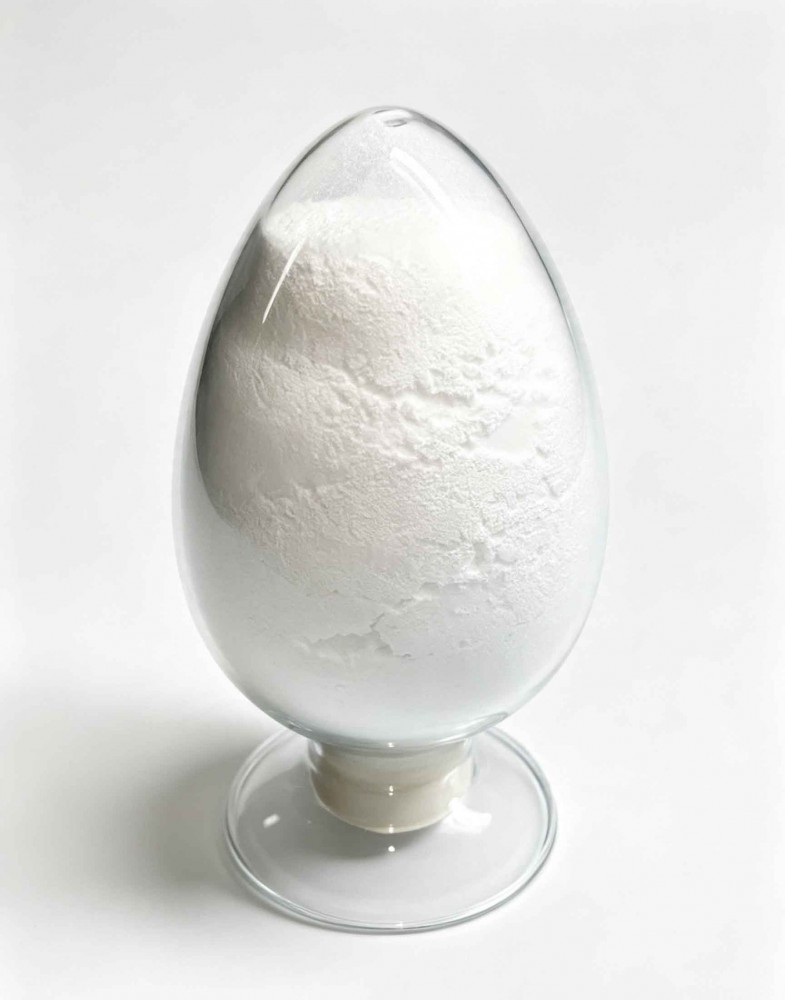
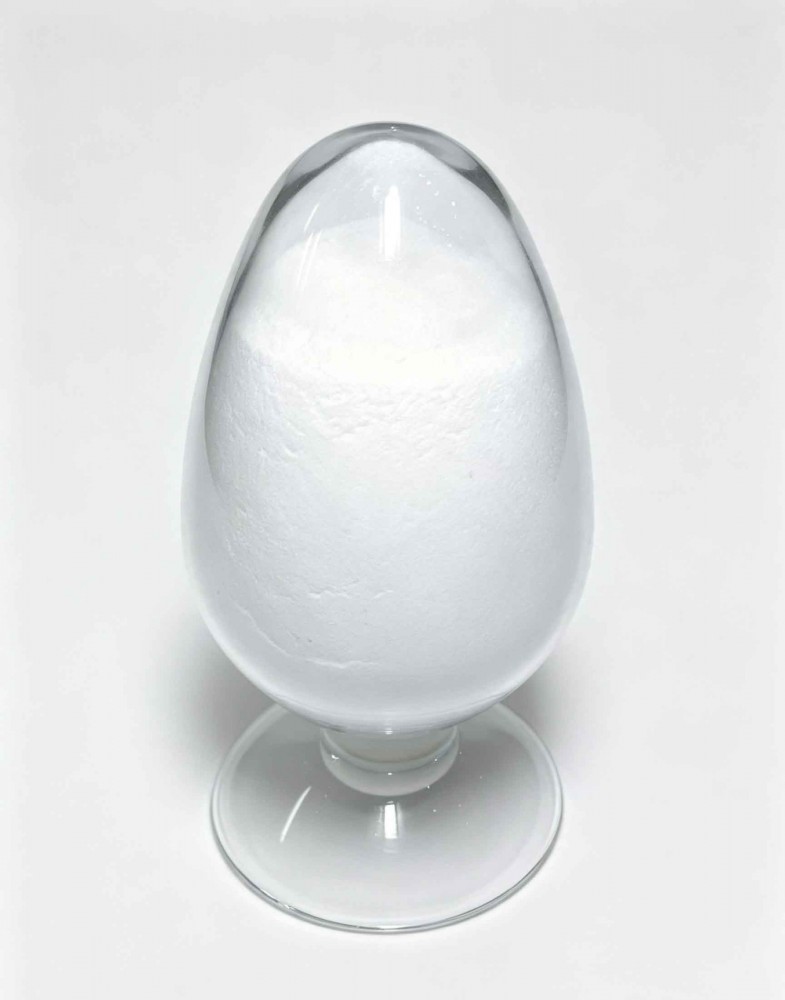
| F503A | White powder | Silica (non-carrier) | 0.5–5% | All thermoplastic polymer |
DX205B — the default for HDPE and MDPE pipe at 0.5–1.5%, metered at the feed throat.
DX207B — the higher-silicone pellet for PE100 high-output lines or very long campaigns.
F503A — the powder form for a powder-blended or toll-compounded PE compound.
Meter the pellet at the throat with the natural or black compound; no extra drying step.
Start at 0.5% and step in 0.5% increments; pipe compounds respond at the low end.
Verify on your own line with motor-load and die-pressure logging plus a surface check.
Keep wall-thickness and sag testing in the loop so any change is attributable to the process, not the additive.
Extruder torque — a 10–20% drop at unchanged line speed.
Die pressure and surface — lower pressure and a cleaner, scratch-resistant pipe.
Die cleaning interval — longer between stoppages.
Hydrostatic and ESCR — unchanged after verification per ISO 4427 / ISO 13479 on your compound.
The lubrication is internal and does not change the PE matrix, so rated properties hold. Verify with ISO 13479 ESCR and hydrostatic testing on your own compound before release.
The additive stays dispersed with no bloom, so fusion joint quality is unaffected; confirm butt-fusion joint testing on your own pipe diameter.
Open at 0.5% and step to 1%; most pressure-pipe compounds settle between 0.5% and 1%.
No — the high-molecular-weight siloxane remains in the compound, which is why plate-out is reduced rather than increased.
Yes, it is compatible; for high-regrind blends plan for the upper part of the dosing band and confirm properties.
ISO 9001 controlled production, a certificate of analysis per batch, and REACH plus RoHS documentation with SGS reports are provided.
Testing DX205B on your HDPE Water Supply Pipe? Send us your recipe and target — we return the matched grade, TDS and a 1 kg sample within 3 working days.
Xiangxi New Material — A professional China manufacturer of Silicone Masterbatches and plastic additives. RoHS & REACH compliant options available.
Privacy Policy ·
AI Policy ·
Copyright ·
Sitemap
Copyright © 2016-2026 Xiangxi New Material Co., Ltd. All Rights Reserved.